
by | Jun 17, 2026 | Uncategorized
A kitchen knife slips, a glass edge catches your hand, or a fall leaves a deep split in the skin. In that moment, finding a same day stitches appointment is not about convenience alone. It is about protecting the wound, reducing infection risk, and giving your skin the best chance to heal cleanly.
When a cut needs more than a bandage, timing matters. Some wounds can be safely cleaned and closed with simple home care, while others need prompt medical attention to control bleeding, bring the skin edges together, and help minimize scarring. Knowing the difference can spare you hours of uncertainty and help you make a better decision quickly.
When a same day stitches appointment makes sense
Not every cut requires stitches. A shallow paper cut or small scrape usually heals well with cleansing, light pressure, and a protective dressing. A deeper laceration is different.
A wound often needs same-day evaluation if it continues bleeding after steady pressure, gapes open when you relax the skin, exposes deeper tissue, or sits on an area that moves constantly, such as a finger, knee, elbow, or face. Cuts caused by broken glass, metal, tools, or a fall on pavement also deserve closer attention because contamination and tissue damage are common.
Location matters too. Facial lacerations, cuts near the eyes, wounds across joints, and injuries involving the hands can affect both appearance and function. In those cases, careful closure is not just cosmetic. It can support better movement, comfort, and healing.
There is also a practical time window. Many lacerations are best repaired within hours of the injury, although the right timing depends on depth, contamination, body location, and your overall health. If you wait too long, a clinician may decide that immediate closure is no longer the safest option. That is one reason a prompt appointment can make a meaningful difference.
Signs your cut should be seen by a physician
A lot of patients hesitate because they do not want to overreact. That instinct is understandable, but certain warning signs should push the decision toward medical care.
If the wound is deep enough that you can see yellow fat, muscle, or other underlying tissue, it needs professional evaluation. If bleeding restarts as soon as pressure is released, the wound may require closure or more advanced treatment. Numbness, weakness, severe swelling, or trouble moving the affected area can suggest injury beyond the skin.
A dirty wound is another reason not to wait. Animal bites, puncture wounds, cuts from rusty or contaminated objects, and injuries with visible debris can carry a higher infection risk. In those situations, stitches may still be appropriate, but the wound has to be assessed carefully first. Sometimes the best treatment includes irrigation, debridement, a tetanus update, or medication in addition to closure.
If you are on blood thinners, have diabetes, poor circulation, or a condition that affects healing, it is especially wise to seek physician-led care sooner rather than later. These details can change how a wound should be treated.
What happens during a same day stitches appointment
One reason people put off treatment is simple uncertainty. They imagine a long, stressful process when most straightforward laceration repairs are organized, efficient, and much more comfortable than expected.
The visit usually begins with a physician evaluating how the injury happened, how long ago it occurred, whether the area was contaminated, and whether there may be damage to deeper structures. The wound is then examined for depth, location, bleeding, and tension on the surrounding skin.
Before stitches are placed, the area is cleaned thoroughly. This step matters. A well-irrigated wound is less likely to trap bacteria and debris, which can affect healing later. Local anesthetic is typically used so the repair can be done with greater precision and far less discomfort.
From there, the closure method depends on the wound itself. Traditional sutures are common for many deeper or high-tension cuts. Some smaller injuries may do well with adhesive strips or skin glue, while others need layered closure beneath the surface for better support. A physician-led approach is valuable here because the best result is not just about closing the skin. It is about choosing the technique that fits the anatomy, the movement of the area, and the cosmetic considerations involved.
After repair, you should receive instructions on cleaning, dressing changes, activity limits, and timing for removal if non-absorbable stitches are used. Good aftercare is where a lot of healing success happens.
Why speed matters, but so does judgment
Fast care is important, but quick treatment should never mean rushed treatment. The best same-day wound care balances responsiveness with precision.
A clean, straight cut on the forearm is different from a jagged wound on the lip or a laceration over a knuckle. Some wounds can be closed immediately with excellent results. Others need a more cautious plan because the infection risk is too high or the tissue damage is too irregular. That is why an experienced physician evaluates more than the surface appearance.
There is also a comfort factor that patients notice right away. In a more personalized urgent care setting, the experience tends to feel calmer, more attentive, and less transactional. For busy professionals, families, and anyone who would rather avoid an impersonal emergency room visit for a non-life-threatening laceration, that difference matters.
Questions patients often ask before getting stitches
The first question is usually whether stitches will hurt. Most patients feel the numbing process more than the repair itself. Once the area is anesthetized, treatment is typically very manageable.
The second concern is scarring. Any cut deep enough to need closure can leave a mark, but timely repair and proper technique can improve how a wound heals. So can following aftercare instructions carefully and returning for stitch removal at the right time.
People also ask whether they can wait until tomorrow. Sometimes the answer is yes, but often that is a gamble. Delaying closure may limit your options and can increase infection risk in certain wounds. If the cut is deep, bleeding, or open at the edges, getting it assessed the same day is usually the better call.
Another common question is whether urgent care is appropriate or whether the emergency room is necessary. For many minor to moderate lacerations, urgent care is the right setting. If there is uncontrolled bleeding, a possible fracture, loss of function, severe facial trauma, or signs of major vessel or tendon injury, emergency-level care may be more appropriate.
Aftercare can affect the final result
Once the wound is closed, the job is only partly done. The quality of healing depends heavily on what happens over the next several days.
Keep the area clean and protected, and follow the specific instructions you were given rather than relying on general advice from friends or online forums. Some wounds should stay dry for a short period, while others may be gently cleaned sooner. The location of the injury, the type of closure, and your skin all influence the plan.
Watch for increasing redness, warmth, swelling, pus, worsening pain, fever, or the wound pulling apart. These can be signs that the area needs to be rechecked. If stitches were placed over a joint or another mobile area, limiting strain is often just as important as keeping the site clean.
For visible areas such as the face, scar care may become part of the conversation after the skin has sealed. That can include sun protection and physician guidance on the right timing for any additional support. Rushing that process is rarely helpful.
Choosing a more thoughtful urgent care experience
When you need wound repair, you are not just looking for someone to close the skin quickly. You want clinical judgment, careful technique, and a setting that treats the injury with appropriate urgency while still giving you personal attention.
That is where a premium, physician-led urgent care model stands apart. At Dr. Farah VIP Urgent Care, patients who need laceration repair can access prompt medical attention with a more attentive, comfort-focused experience than they may expect from a standard walk-in clinic. That combination of speed and individualized care is especially valuable when the injury is painful, stressful, or in a cosmetically sensitive area.
A same-day appointment for stitches is not about overreacting to a cut. It is about giving your body the right support at the right time. If a wound looks deep, keeps bleeding, or will not stay closed, trust that instinct and have it evaluated while timely repair is still an option.

by | Jun 15, 2026 | Uncategorized
You wake up with a painful sore throat, a deep cough, and a calendar that does not have room for an ER wait. Or your child spikes a fever late in the afternoon. Or a kitchen mishap leaves you staring at a cut that clearly needs more than a bandage. In moments like these, a good guide to urgent care visits can save time, reduce stress, and help you make the right medical decision quickly.
Urgent care works best when you understand both its strengths and its limits. It sits in the middle ground between a primary care office and an emergency room, offering prompt treatment for illnesses and injuries that need attention soon, but are not immediately life-threatening. For many adults, families, and professionals, that balance is exactly what makes urgent care so valuable.
When urgent care is the right choice
Urgent care is designed for issues that should not wait several days for a routine appointment, but do not require the resources of a hospital emergency department. Common reasons to go include fevers, sore throats, coughs, flu-like symptoms, ear infections, sinus pain, urinary discomfort, rashes, mild asthma flare-ups, minor burns, sprains, simple fractures, cuts that may need stitches, and wound checks.
It can also be the right setting for dehydration, nausea, vomiting, minor allergic reactions, and painful infections that need same-day evaluation. In a physician-led setting, patients often benefit from more nuanced decision-making, especially when symptoms overlap or when treatment needs to be tailored rather than rushed.
That said, urgent care is not the right place for every problem. Chest pain, severe shortness of breath, stroke symptoms, major head injuries, heavy bleeding, seizures, loss of consciousness, or signs of a severe anaphylactic reaction require emergency care. If there is any real concern that a condition may be life-threatening, the ER is the safer choice.
A practical guide to urgent care visits before you leave home
The best urgent care visits usually start before you arrive. A few minutes of preparation can make your care faster, more precise, and less frustrating.
Bring a photo ID, your insurance card if applicable, a list of medications, and basic medical history, including allergies and chronic conditions. If you have recent test results, discharge papers, or imaging reports related to the current issue, bring those too. For a child, it helps to have vaccination history and details on when symptoms started.
It is also worth pausing to organize your symptoms clearly. When did they begin? Are they getting worse, staying the same, or coming in waves? Have you had a fever, taken medication, or tried any home treatment? These details help a clinician quickly narrow the possibilities.
Photos can be useful as well. If a rash looked worse that morning, or a wound bled more heavily before you cleaned it, an image on your phone may add context. That is especially helpful when symptoms change throughout the day.
What to expect during urgent care visits
Patients often assume urgent care is a faster version of any other walk-in clinic. Sometimes it is. But the quality of the visit depends heavily on who is evaluating you, how thorough the assessment is, and whether the practice has the ability to act on findings in real time.
A well-run urgent care visit begins with a focused but careful history, followed by an exam targeted to your symptoms. Depending on the issue, you may need testing such as a rapid strep test, flu or COVID testing, urinalysis, or basic wound assessment. If you have a laceration, sprain, or infection, treatment may happen on the spot rather than being deferred.
This is one reason many patients prefer physician-directed urgent care over large-volume chain settings. A physician can often spot subtle warning signs, adjust treatment more precisely, and make better decisions about whether you can be safely treated on-site or need a higher level of care. That clinical judgment matters, especially when symptoms are not textbook simple.
You should also expect a clear plan. That includes what the diagnosis appears to be, what treatment is being recommended, how quickly you should improve, and what symptoms mean you should seek further care.
How to decide between urgent care, primary care, and the ER
This is the part of any guide to urgent care visits that patients need most, because the wrong setting can cost both time and peace of mind.
Primary care is best for ongoing issues, preventive care, medication management, chronic disease follow-up, and non-urgent symptoms that can wait a few days. If you need blood pressure follow-up, long-term weight management, hormone evaluation, or a review of recurring digestive symptoms, your primary physician is usually the right starting point.
Urgent care is best for new problems that need prompt attention. Think painful urination, a persistent fever, a cut that may need repair, a bad cough before travel, or a swollen ankle after a fall. It is also helpful when your regular doctor cannot see you promptly.
The ER is for emergencies or situations that may become emergencies quickly. If the concern is serious enough that you are debating whether it is “too much” for urgent care, ask whether a delay could be dangerous. If the answer is yes or maybe, choose emergency care.
There are gray areas, of course. Abdominal pain is a good example. Mild discomfort may be appropriate for urgent care. Severe pain, fainting, rigid abdomen, or concern for appendicitis is different. The right answer depends on intensity, associated symptoms, age, medical history, and how quickly the condition is evolving.
Choosing the right urgent care experience
Not all urgent care centers offer the same level of care. That becomes obvious when you need more than a quick prescription.
A premium, physician-led model tends to appeal to patients who value time, clinical depth, and a more attentive environment. If you are balancing work, family, travel, or a high-performance lifestyle, being seen quickly is only part of the equation. You also want confidence that the evaluation is thoughtful, the treatment plan is individualized, and the experience does not feel rushed or impersonal.
This matters even more for patients with complex health goals. Someone recovering from dehydration after travel may need IV hydration. A patient with a painful wound may need skilled repair, not just a basic dressing. A person dealing with acute illness while also focused on metabolic health or physician-supervised weight optimization may benefit from care that takes the bigger picture into account.
That is where a practice such as Dr. Farah VIP Urgent Care stands apart. The combination of urgent medical treatment, physician oversight, and a patient-focused approach creates a more comfortable and precise experience than many standard walk-in clinics can offer.
What urgent care can and cannot do on the spot
One common misunderstanding is that urgent care either handles everything or handles almost nothing. The truth is more practical.
Urgent care can often evaluate and treat infections, flu-like illness, UTIs, mild breathing concerns, allergic reactions, minor injuries, dehydration, and wounds requiring repair. Some centers also offer procedures such as incision and drainage, medication injections, and IV-based support when clinically appropriate.
What urgent care usually cannot provide is the full hospital infrastructure needed for major trauma, advanced cardiac emergencies, stroke care, surgical emergencies, or prolonged monitoring. If your condition may require a CT scan immediately, specialist intervention, blood transfusion, or hospital admission, urgent care may only be a first stop before transfer.
That does not make urgent care less useful. It just means the smartest visits happen when expectations match the setting.
How to get the most from your visit
Be direct about your main concern. Patients often lead with the least important symptom and mention the real issue at the end. If you are worried a wound is infected, say so early. If your biggest concern is whether you are safe to travel tomorrow, that matters too.
Ask practical questions. How long should recovery take? What side effects should I expect from this medication? When should I return if I am not improving? Do I need follow-up with a specialist or primary doctor? Good care is not just treatment in the moment. It is knowing what comes next.
It also helps to be honest about your priorities. Some patients care most about speed. Others want the most conservative approach. Others need treatment that fits around work, childcare, or an upcoming event. The more clearly you communicate those realities, the easier it is for your clinician to guide you well.
The real value of a guide to urgent care visits
The point of urgent care is not simply convenience. It is timely medical attention that helps prevent a manageable issue from becoming a bigger one. The best visits deliver more than speed. They offer judgment, reassurance, and treatment that fits the patient in front of the clinician.
When you know when to go, what to bring, and what kind of care to look for, urgent care becomes far less stressful. It becomes a reliable part of how you protect your health, recover faster, and keep life moving with less disruption.
The next time something unexpected happens, do not wait until discomfort turns into chaos. A well-timed visit, in the right hands, can make all the difference.

by | Jun 13, 2026 | Uncategorized
A kitchen knife slips, a glass breaks, a child catches a sharp edge, or a fall leaves more than a scrape. In those moments, same day laceration repair is not just about convenience. It can make a real difference in bleeding control, infection risk, healing quality, and how noticeable a scar becomes.
Not every cut needs stitches, but some absolutely do. The challenge is that many people wait too long because the wound looks manageable at first, only to notice persistent bleeding, gaping skin edges, or increasing pain later. Prompt physician evaluation helps determine whether a wound can be cleaned and closed safely, or whether a deeper injury needs a more advanced level of care.
When same day laceration repair matters most
A simple paper cut is one thing. A laceration is different. It usually means the skin has been torn deeply enough that the wound edges separate, bleeding is harder to control, or underlying tissue may be involved.
Same day care matters most when the cut is still actively bleeding after direct pressure, when the wound is deep enough to expose fat or other tissue, or when it sits in a high-movement area such as the hand, finger, elbow, knee, or face. These areas tend to pull apart with normal movement, which makes clean healing less likely without proper closure.
Timing matters because wounds are generally easier and safer to close soon after the injury. If too much time passes, bacteria have more opportunity to multiply and swelling can make repair more difficult. There is no single deadline that applies to every wound. A clean cut on the face may be treated differently from a contaminated cut on the leg. That is why an individual assessment is so important.
Signs a cut may need stitches
People often ask the same question in different ways: Does this need stitches, or can I just bandage it at home? The answer depends on more than length alone.
A wound may need closure if the edges do not come together on their own, if it continues to bleed despite pressure, if it is deep or jagged, or if it was caused by broken glass, metal, or another object that may have left debris behind. Numbness, weakness, difficulty moving a finger, or a change in sensation can also suggest injury beyond the skin itself.
Location matters, too. Even a smaller laceration on the face may deserve prompt repair because cosmetic outcome is more important there. A cut over a joint or on the palm may need attention because tension and movement interfere with healing. Image-conscious patients often appreciate that early, precise closure can support a better aesthetic result, but appearance is only part of the story. Function comes first.
What happens during same day laceration repair
The best laceration care starts before any stitch is placed. A physician begins by looking at how the injury happened, how long ago it occurred, whether the wound is contaminated, and whether deeper structures may be involved.
The area is then carefully cleaned and irrigated. This step is essential. Closing a dirty wound without proper cleansing can trap bacteria inside, increasing the chance of infection. If small fragments of glass, dirt, or other material are present, they need to be identified and removed when possible.
After that, the wound is assessed for the best repair method. Sutures are common, but they are not the only option. Some cuts may be appropriate for adhesive strips, skin glue, or a layered repair if the wound is deeper beneath the surface. The right choice depends on depth, tension, location, and how clean the wound is.
Local numbing medication is often used so the repair can be done comfortably. For many patients, the anticipation is worse than the procedure itself. Once the area is numb, proper alignment of the wound edges becomes the priority. This affects both healing strength and scar appearance.
Why professional repair is not the same as a home bandage
There is a big difference between covering a wound and treating it well. A bandage can protect the area for the moment, but it cannot evaluate whether tendons, nerves, blood vessels, or deeper tissue were injured. It also cannot decide whether the wound is safe to close, whether a tetanus update is needed, or whether signs of infection are already developing.
Some cuts look minor on the surface but extend more deeply than expected. Others appear dramatic yet only involve the outer layers of skin. That difference is not always easy to judge at home.
This is one reason many adults prefer physician-led urgent care instead of a long, impersonal emergency room visit for a non-life-threatening injury. When you can be seen promptly, the care process feels more focused, more comfortable, and more precise.
The trade-offs: when closure helps and when it may not
People often assume every open cut should be stitched immediately. That is not always the right move.
If a wound is heavily contaminated, already infected, or too old for safe closure, a physician may decide not to close it right away. In some cases, allowing drainage or using delayed closure is safer than sealing bacteria inside. Animal bites, puncture wounds, and dirty injuries require especially careful judgment.
There are also cases where a patient hopes to avoid any scar at all. Unfortunately, no repair can promise that. The goal is to support the best possible healing, reduce tension, lower infection risk, and improve the final result. Early care helps, but scar formation depends on several factors, including wound depth, location, skin type, aftercare, and genetics.
Same day laceration repair and scar outcome
One of the clearest benefits of same day laceration repair is better control over wound alignment. When skin edges are brought together neatly and with the right amount of tension, healing is often smoother and more predictable.
That said, the repair itself is only one part of the scar story. Aftercare matters just as much. Keeping the wound clean, dry when instructed, and protected from unnecessary strain can prevent the repair from reopening. Once the skin has closed, sun protection becomes especially important because fresh scars can darken with UV exposure.
Patients are sometimes surprised that overhandling a wound can slow healing. Constantly checking it, applying too many products, or removing dressings too soon can irritate the area. Following clear physician guidance tends to produce better results than trying several home remedies at once.
What to expect after treatment
Most patients can return home the same day with straightforward wound care instructions. Depending on the injury, you may be told when to change the dressing, when it is safe to get the area wet, what signs of infection to watch for, and when sutures should be removed.
Some discomfort, mild swelling, and tenderness are normal in the first few days. Worsening redness, increasing pain, pus, fever, or red streaking are not normal and should be assessed promptly.
The timeline for suture removal depends on where the laceration is located. Facial stitches typically come out sooner than those on the hands, feet, or joints. Removing them at the right time matters. Too early, and the wound may reopen. Too late, and stitch marks can become more noticeable.
When a cut needs more than urgent care
Urgent care is appropriate for many lacerations, but not all. If bleeding is severe and will not stop, if bone is visible, if a finger cannot move normally, if there is major numbness, or if the injury involves the eye, chest, or deep facial structures, emergency care may be the better choice.
The same is true after high-impact trauma, major crush injury, or if you suspect a foreign body remains deep in the wound. Good care includes knowing when a wound is within the scope of outpatient repair and when it needs emergency or specialist management.
At a physician-led practice such as Dr. Farah VIP Urgent Care, that judgment is part of the value. Patients are not simply moved through a protocol. They are evaluated individually, with attention to comfort, timing, cosmetic considerations, and medical safety.
If you are debating whether to wait and see, the safer approach is usually to have the wound assessed sooner rather than later. A cut that receives timely attention is often easier to treat, less likely to become complicated, and more likely to heal the way you hope it will. When the injury is fresh, thoughtful care can do more than close a wound. It can protect your function, your comfort, and your peace of mind.

by | Jun 11, 2026 | Uncategorized
That deep, rattling cough that keeps you up at 2 a.m. can make a simple question feel urgent: how to treat bronchitis without letting it drag on for weeks. Bronchitis is common, but the right treatment depends on what is causing it, how severe your symptoms are, and whether you have risk factors like asthma, smoking history, or an underlying lung condition.
Bronchitis means inflammation of the bronchial tubes, the airways that carry air to and from your lungs. When those airways become irritated, they swell and produce extra mucus. The result is often a persistent cough, chest discomfort, fatigue, and that heavy feeling in the chest many patients describe as congestion that will not break.
How to treat bronchitis at home
For most cases of acute bronchitis, supportive care is the foundation of treatment. In plain terms, that means helping your body recover while easing symptoms and watching for signs that the illness is becoming more serious.
Rest matters more than many adults want to admit. If you keep pushing through long workdays, workouts, or poor sleep, recovery often takes longer. Your airways are inflamed, and your body is already using energy to fight off infection or irritation.
Hydration is also central. Drinking enough fluids can help thin mucus, which may make coughing more productive and less painful. Warm liquids such as tea, broth, or warm water with honey can feel especially soothing. Honey may help calm a cough in adults and children over age one, although it is not safe for infants.
Moist air can help as well. A humidifier or steamy shower may reduce throat and airway irritation, especially if your cough feels dry and hacking. The key is moderation and cleanliness. A poorly maintained humidifier can introduce mold or bacteria into the air, which can make respiratory symptoms worse.
Over-the-counter medications can be useful, but they are not one-size-fits-all. Acetaminophen or ibuprofen may help with fever, body aches, and chest discomfort from repeated coughing. Cough suppressants can offer nighttime relief when sleep is being disrupted, while expectorants may help loosen mucus for some people. Still, these products do not treat the cause of bronchitis, and some people with high blood pressure, heart conditions, or other medical issues need to be selective.
What actually helps and what does not
One reason people struggle with how to treat bronchitis is that the internet tends to blend reasonable advice with outdated or misleading claims. The most important distinction is whether your bronchitis is viral, bacterial, or related to another issue such as asthma or environmental irritation.
Most acute bronchitis is caused by viruses. In those cases, antibiotics do not help. Taking them when they are not needed can expose you to side effects and contributes to antibiotic resistance. This is why a careful medical evaluation matters, particularly if symptoms are lingering or changing.
If wheezing is part of the picture, some patients benefit from an inhaler that opens the airways. This is more likely if you have reactive airways, asthma, or significant bronchospasm. If inflammation is severe, a physician may sometimes recommend additional treatment, but that decision should be individualized.
Smoking and vaping make recovery harder. Even a short break is better than continued airway irritation while your lungs are trying to heal. Exposure to dust, chemical fumes, heavy fragrances, and wildfire smoke can also keep symptoms going longer than expected.
When bronchitis needs medical treatment
Many cases improve gradually over one to three weeks, though the cough can last longer. That said, there is a difference between a lingering cough and a condition that deserves prompt physician attention.
You should be evaluated if you have shortness of breath, high fever, chest pain, confusion, bluish lips, dehydration, or symptoms that are worsening rather than slowly improving. A cough that lasts more than three weeks, coughing up blood, or significant wheezing should also prompt medical care.
Age and medical history matter. Older adults, pregnant patients, and people with asthma, COPD, heart disease, diabetes, or weakened immunity should have a lower threshold for being seen. What starts as bronchitis can sometimes overlap with pneumonia, influenza, COVID-19, or an asthma flare.
In a clinical setting, treatment is tailored to the findings. A physician may listen for wheezing or crackles, check oxygen levels, review how long symptoms have been present, and decide whether testing or imaging is needed. That is how you avoid both undertreatment and unnecessary medication.
Acute vs. chronic bronchitis
If you want to understand how to treat bronchitis correctly, it helps to know which type you may be dealing with. Acute bronchitis is short-term and usually follows a viral upper respiratory infection. Chronic bronchitis is different. It is defined by a productive cough that lasts at least three months in a year for two consecutive years, often in the setting of smoking or chronic lung disease.
Acute bronchitis is usually managed with rest, fluids, symptom relief, and close observation. Chronic bronchitis needs a broader plan that may include inhalers, smoking cessation, lung evaluation, and ongoing medical management. Treating chronic bronchitis as if it were just a passing cold can delay appropriate care.
How to sleep and recover more comfortably
The cough from bronchitis is often worst at night. Lying flat can make mucus pool and trigger more coughing. Sleeping with your head elevated on extra pillows or a wedge can make a noticeable difference.
Try to keep your bedroom air comfortable, not overly dry, and avoid alcohol close to bedtime if coughing is already disruptive. Alcohol can worsen dehydration and may increase throat irritation in some people. Small adjustments are not glamorous, but they often improve comfort while your airways settle down.
It is also wise to return to exercise gradually. If a brisk walk sets off coughing fits or chest tightness, your body is telling you it is not ready for full intensity yet. Pushing too soon can prolong irritation.
Common mistakes people make
One common mistake is assuming yellow or green mucus automatically means you need antibiotics. Mucus color alone does not reliably separate viral from bacterial illness. Another is using multiple over-the-counter cold medications at once without realizing they contain overlapping ingredients.
Some patients also wait too long when symptoms shift from annoying to concerning. If you feel markedly short of breath walking across the room, or your cough is paired with fever that will not break, that is not the moment for another home remedy.
On the other side, some people expect bronchitis to resolve in just a few days. Even uncomplicated cases can leave behind a stubborn cough after the infection itself has passed because the airways remain irritated. That can be normal, but normal should still trend in the right direction.
When personalized care makes a difference
Bronchitis can look simple on paper, yet treatment is not identical for every patient. A healthy adult with a mild viral cough may only need supportive care. A busy professional with wheezing, chest tightness, and poor sleep may benefit from a more directed plan. Someone with asthma or recurrent bronchitis may need a closer look at the underlying pattern, not just the current illness.
That is where physician-led urgent care can offer real value. At Dr. Farah VIP Urgent Care, the focus is not just on moving patients through quickly, but on understanding the full picture so treatment feels precise, responsive, and reassuring.
When to call sooner rather than later
If you are unsure whether you are dealing with straightforward bronchitis or something more serious, pay attention to the quality of your breathing. Mild coughing and fatigue are common. Struggling to catch your breath, breathing fast at rest, or feeling chest pain with each breath are different.
You should also seek prompt care if your symptoms started to improve and then suddenly worsened, especially with fever or heavier chest congestion. That pattern can suggest a secondary infection or a different diagnosis altogether.
The best approach to bronchitis is rarely aggressive for the sake of it, and it is rarely neglectful. It is thoughtful, symptom-aware, and tailored to what your body is showing you day by day. If your cough is lingering, your breathing feels off, or you simply want clarity instead of guesswork, getting the right evaluation can make recovery feel much less uncertain.
by | Jun 9, 2026 | Uncategorized
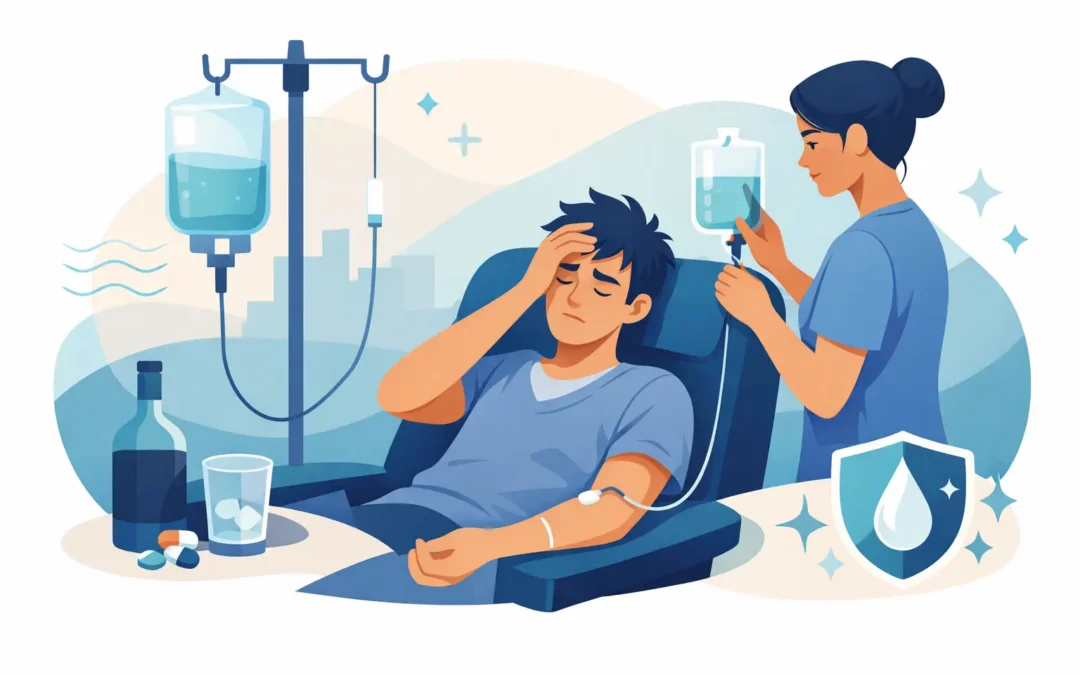
That pounding headache, dry mouth, nausea, and heavy, foggy feeling the morning after are miserable enough on their own. What makes it worse is needing to be functional quickly – for work, travel, family obligations, or simply getting through the day without feeling depleted. That is why iv therapy for hangover has become such a common question in premium urgent care and wellness settings.
The appeal is easy to understand. If a hangover leaves you dehydrated, unable to keep fluids down, and struggling with fatigue or nausea, IV hydration seems like a faster, more direct solution than trying to sip water and wait. But the real answer is more nuanced than marketing claims suggest. For some patients, it can provide meaningful relief. For others, rest, oral fluids, and time may be enough.
What IV therapy for hangover is meant to do
A hangover is not just one thing. Alcohol can contribute to dehydration, electrolyte shifts, poor sleep, stomach irritation, headaches, and a general inflammatory response that leaves you feeling run down. In some cases, people are also dealing with low blood sugar from not eating well, or ongoing vomiting that makes recovery slower.
IV therapy for hangover is typically designed to address a few of those factors at once. The foundation is usually intravenous fluids, which may help restore hydration more efficiently than drinking fluids when your stomach is unsettled. Depending on the clinical setting and the physician’s assessment, additional medications or vitamins may be considered to support nausea relief, comfort, and recovery.
That said, an IV does not “cure” alcohol’s effects or erase a night of heavy drinking. It cannot instantly reverse impaired judgment, fully correct poor sleep, or make someone safe to drive if alcohol is still in their system. A reputable medical practice should be clear about that.
When iv therapy for hangover may actually help
The best candidates are usually people whose symptoms suggest dehydration or who are having trouble rehydrating on their own. If you have a dry mouth, dizziness, fatigue, headache, and nausea, especially after vomiting, IV fluids may help you feel better more quickly than trying to push oral hydration.
This can be particularly helpful for busy adults who need physician-directed support rather than a one-size-fits-all wellness service. A medically supervised visit matters because not every “hangover” is just a hangover. Severe vomiting, abdominal pain, chest discomfort, confusion, fainting, or shortness of breath point to a different level of concern and should not be brushed off as routine aftereffects.
There is also a practical difference between mild discomfort and being too sick to keep down water. If you can rest, drink fluids, eat lightly, and your symptoms are improving, an IV may be optional. If you feel significantly depleted and cannot rebound with basic care, physician-supervised hydration becomes more reasonable.
What you can realistically expect
Most patients choose IV therapy because they want relief from dehydration-related symptoms. That may mean less dizziness, less weakness, improvement in dry mouth, and a better overall sense of recovery. If medications are added based on clinical judgment, nausea may improve as well.
Headaches can be more complicated. Sometimes they improve with hydration. Sometimes they are related to sleep disruption, alcohol-related inflammation, or other factors that do not resolve as quickly. The same goes for fatigue. You may feel better after fluids, but you may not feel perfect.
This is where expectations matter. The most trustworthy approach is not promising a glamorous reset. It is careful, individualized treatment with a clear understanding of what an IV can and cannot do.
The limits and trade-offs
There is a reason this topic deserves a balanced conversation. IV hydration can be helpful, but it is not automatically necessary, and it is not risk-free simply because it is common.
For a mild hangover, oral hydration, electrolyte drinks, bland food, and sleep are often enough. In that situation, the trade-off is mostly about convenience and speed. Some people are willing to pay for physician-directed IV care because they value comfort, efficiency, and close medical supervision. Others may prefer to recover at home.
There are also clinical trade-offs. Not everyone should receive the same fluids or additives. People with kidney disease, heart failure, certain blood pressure issues, or other medical conditions may need a more cautious approach. Even a generally healthy patient can have side effects, irritation at the IV site, or a reaction to a medication add-on.
That is why the setting matters. A premium medical experience should still be a medical experience first – with assessment, questions about your symptoms, medication review, and attention to safety.
Why physician supervision matters
The strongest case for iv therapy for hangover is not luxury. It is clinical judgment.
A physician-supervised visit allows someone to look at the whole picture. Are you simply dehydrated, or are you showing signs of alcohol poisoning, gastritis, pancreatitis, a cardiac issue, or a severe electrolyte problem? Are you asking for a quick fix while your symptoms actually require urgent evaluation? Those distinctions matter.
This is especially relevant when symptoms are more severe than expected. Repeated vomiting, inability to tolerate fluids, severe abdominal pain, confusion, tremors, blacking out, or persistent chest symptoms should never be treated casually. A proper medical assessment helps determine whether hydration support is appropriate or whether a higher level of care is needed.
In a physician-led practice such as Dr. Farah VIP Urgent Care, that extra level of discernment is part of the value. Patients are not simply receiving a generic drip. They are receiving individualized attention with a VIP touch, guided by medical expertise and a patient-focused approach.
What a good visit should include
If you are considering IV therapy after drinking, the quality of the evaluation is just as important as the bag of fluids. You should expect questions about how much you drank, when you last consumed alcohol, whether you have been vomiting, whether you hit your head, what medications you take, and whether you have any underlying heart, kidney, or liver conditions.
A careful clinician should also ask about your current symptoms in detail. That includes whether you have fever, chest pain, shortness of breath, severe abdominal pain, blood in vomit, or significant confusion. Those details help separate a rough morning from something more serious.
When treatment is appropriate, the plan should be tailored rather than automatic. Fluids may be enough for one patient. Another may need anti-nausea support or a different level of monitoring. The premium part of care is not bells and whistles. It is precision, responsiveness, and comfort without sacrificing safety.
Who should skip IV therapy and seek urgent medical care instead
Some symptoms call for more than hydration support. If a person is hard to wake, confused, having trouble breathing, seizing, fainting, experiencing chest pain, or showing signs of alcohol poisoning, emergency care is the priority. The same is true for severe abdominal pain, ongoing vomiting that will not stop, signs of internal bleeding, or a possible fall with head injury.
Even less dramatic symptoms can deserve prompt evaluation. If you have significant palpitations, marked weakness, dehydration that feels extreme, or symptoms that do not fit your usual pattern, it is worth getting assessed by a physician rather than assuming it is a standard hangover.
Is it worth it?
For the right patient, yes. If dehydration is a major part of what is making you feel awful, and especially if nausea or vomiting is slowing recovery, IV therapy may help you rebound faster and more comfortably. For someone who values rapid access, privacy, and a higher standard of medical attention, that can be well worth it.
But it depends on your symptoms, your medical history, and the quality of the clinical setting. A mild hangover does not always need an IV. A severe “hangover” may actually be something else. The smartest choice is not the most aggressive one. It is the one guided by sound medical judgment.
When you feel depleted, the goal should not be to mask warning signs or force your body back on schedule at any cost. It should be to recover safely, with care that respects both how you feel now and your overall health.

by | Jun 7, 2026 | Uncategorized
For many adults struggling with weight, the real question is not whether a medication can help them lose pounds. It is whether that treatment is safe enough to fit into real life, existing health conditions, and long-term goals. If you are asking, is semaglutide safe for obesity, the most accurate answer is yes for many patients, but not for everyone, and safety depends heavily on proper medical screening, dosing, and follow-up.
Semaglutide has become one of the most talked-about prescription options in obesity medicine because it can produce meaningful weight loss in patients who have not had success with diet and exercise alone. At the same time, it is still a serious medication, not a shortcut and not something to start casually. The right conversation is not simply whether it works, but whether it is appropriate for your body, your risks, and your treatment plan.
Is Semaglutide Safe for Obesity in General?
In general, semaglutide is considered safe and effective for chronic weight management when it is prescribed appropriately and monitored by a qualified physician. It belongs to a class of medications called GLP-1 receptor agonists, which help regulate appetite, slow stomach emptying, and improve blood sugar control. For patients with obesity or overweight with related medical conditions, that can translate into lower calorie intake and steady, clinically significant weight loss.
What makes semaglutide attractive is that it has been studied extensively. Clinical trials have shown substantial weight reduction compared with placebo, and many patients also see improvements in blood sugar, waist circumference, and some cardiometabolic risk factors. That said, a medication can be effective and still require caution. Safety is never one-size-fits-all.
A healthy 42-year-old with obesity and insulin resistance may be an excellent candidate. A patient with certain endocrine histories, active gastrointestinal problems, or specific medication interactions may need a different plan. That distinction matters.
How semaglutide works and why that affects safety
Semaglutide mimics a natural hormone involved in appetite and glucose regulation. By signaling fullness and slowing gastric emptying, it helps many patients feel satisfied sooner and reduce overeating without relying purely on willpower. That mechanism is part of why the medication works so well, but it is also why the most common side effects are gastrointestinal.
When the stomach empties more slowly, patients may experience nausea, bloating, constipation, vomiting, diarrhea, or early fullness. These symptoms are often mild to moderate and tend to improve over time, especially when dosing is increased gradually. The step-up dosing schedule is not just about comfort. It is a safety strategy.
A rushed approach raises the chance that a patient will feel miserable, stop the medication too early, become dehydrated, or miss warning signs that deserve evaluation. Good obesity care is rarely about handing over a prescription and hoping for the best.
Common side effects versus serious risks
Most people who take semaglutide do not experience a dangerous complication, but many do notice side effects early in treatment. The most common ones are nausea, constipation, diarrhea, reflux, burping, and reduced appetite. Some patients also report fatigue or mild headaches, especially if they are eating far less than usual or not hydrating adequately.
These effects can often be managed with slower dose escalation, smaller meals, avoiding heavy or greasy foods, and careful hydration. In a supervised medical setting, adjustments can be made before side effects turn into a larger problem.
More serious risks are less common, but they are the reason medical oversight matters. Semaglutide may be associated with pancreatitis, gallbladder problems such as gallstones, significant vomiting with dehydration, worsening diabetic retinopathy in some patients with diabetes, and rare kidney stress related to fluid loss. There is also an important boxed warning related to thyroid C-cell tumors seen in rodent studies. Because of that concern, semaglutide is generally not recommended for patients with a personal or family history of medullary thyroid carcinoma or multiple endocrine neoplasia syndrome type 2.
Rare does not mean irrelevant. It means a physician should know what to screen for and what symptoms deserve prompt attention.
Who may be a good candidate
Semaglutide is generally considered for adults with obesity, or for adults who are overweight and also have weight-related medical concerns such as prediabetes, type 2 diabetes, high blood pressure, or sleep apnea. It may be especially helpful for patients who have spent years trying structured nutrition plans, exercise programs, or behavior changes without sustainable results.
The best candidates usually want more than rapid weight loss. They want medically guided metabolic improvement and are prepared to follow a thoughtful plan that includes monitoring, nutrition support, and realistic lifestyle changes. That combination tends to produce better outcomes and a safer experience.
Patients who do well often appreciate that semaglutide reduces food noise and helps them feel more in control. Still, motivation alone is not enough. A proper medical history, medication review, and baseline assessment are essential before deciding whether the treatment makes sense.
Who may need caution or a different approach
There are several situations where semaglutide may not be the best fit, or may need extra caution. A history of pancreatitis, gallbladder disease, severe gastrointestinal symptoms, certain thyroid cancer risks, pregnancy, or plans to become pregnant all deserve careful discussion. Patients taking other glucose-lowering medications may also need monitoring to avoid blood sugar issues.
This is where personalized medicine matters. Two people may have the same body mass index and very different safety profiles. One may tolerate semaglutide beautifully. Another may be better served by a different medication, a different dosing strategy, or a broader metabolic workup first.
For busy adults who want efficient care, it can be tempting to look for the fastest path to treatment. But obesity medicine works best when speed does not replace precision.
Is semaglutide safe for obesity without doctor supervision?
That is where the answer becomes much firmer. Semaglutide is not safest when used without physician guidance. It should be prescribed, monitored, and adjusted by a licensed medical professional who understands obesity treatment and the patient as a whole.
Monitoring is not just a formality. It helps catch problems early, confirm that side effects are manageable, and make sure the medication is actually supporting health rather than just changing the number on the scale. It also creates space to address nutrition, muscle preservation, hydration, bowel habits, and long-term maintenance.
In a physician-led program, patients can be evaluated for whether symptoms are expected, whether dose escalation should pause, and whether another issue is being missed. That level of attention is especially valuable for patients with demanding schedules, complex histories, or high expectations for both safety and results.
What safe treatment should look like
Safe semaglutide care usually starts with a thorough assessment, not a quick transaction. That means reviewing medical history, weight history, medications, past weight-loss attempts, family history, and risk factors. Some patients may also need lab work or additional screening before treatment begins.
From there, the medication is typically started at a low dose and increased gradually. Follow-up visits are used to assess tolerance, progress, hydration, eating patterns, bowel function, and any red-flag symptoms. The best programs also address protein intake, exercise, and preservation of lean muscle mass, because losing weight without protecting strength and metabolic health is not the goal.
At Dr. Farah VIP Urgent Care, this type of physician-supervised approach reflects the standard patients should expect from premium obesity care: personalized attention, careful monitoring, and a treatment plan designed around the individual rather than the trend.
The bigger picture: safety includes what happens after weight loss
One of the most overlooked parts of this discussion is that safety is not limited to side effects during the first few weeks. It also includes what happens over months and after weight loss occurs. If a patient loses weight quickly but becomes undernourished, loses muscle mass, or regains the weight after stopping medication abruptly, the experience may not feel successful at all.
That is why semaglutide works best as part of a longer strategy. For some patients, it is a bridge that helps reset appetite and metabolic momentum. For others, it may be part of a more extended treatment plan. Neither option is inherently right or wrong. The safest path is the one that is medically appropriate, sustainable, and closely monitored.
If you have been wondering whether semaglutide is safe enough to consider, the answer starts with your individual health profile, not social media, not a friend’s experience, and not a one-size-fits-all promise. The most effective weight care should help you feel better, function better, and move forward with confidence.