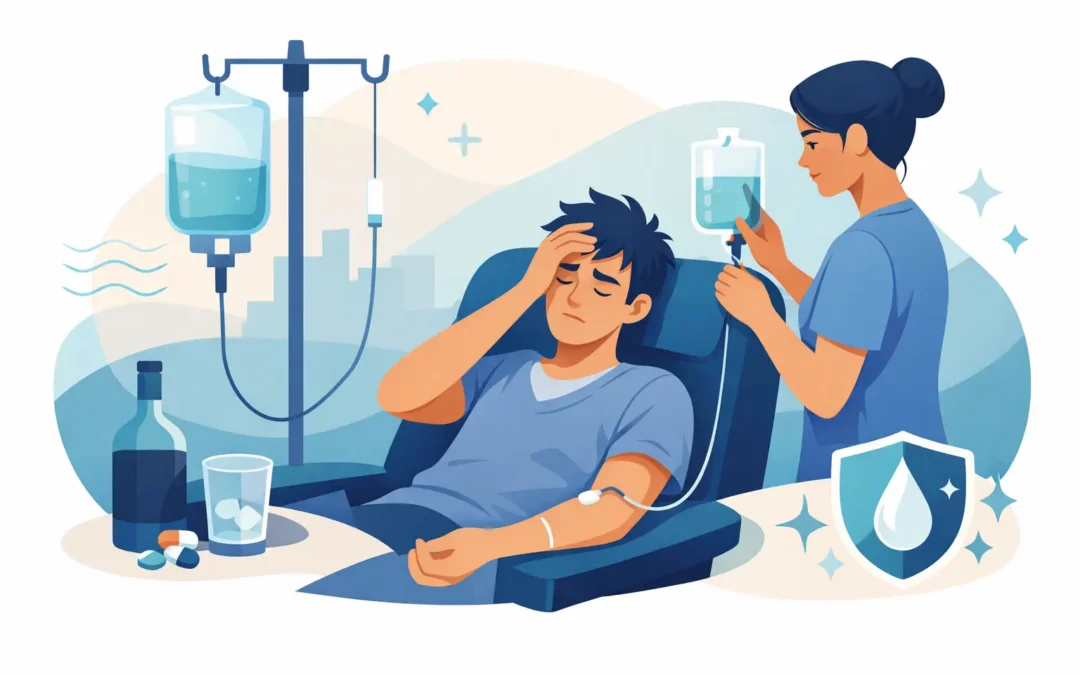
That pounding headache, dry mouth, nausea, and heavy, foggy feeling the morning after are miserable enough on their own. What makes it worse is needing to be functional quickly – for work, travel, family obligations, or simply getting through the day without feeling depleted. That is why iv therapy for hangover has become such a common question in premium urgent care and wellness settings.
The appeal is easy to understand. If a hangover leaves you dehydrated, unable to keep fluids down, and struggling with fatigue or nausea, IV hydration seems like a faster, more direct solution than trying to sip water and wait. But the real answer is more nuanced than marketing claims suggest. For some patients, it can provide meaningful relief. For others, rest, oral fluids, and time may be enough.
What IV therapy for hangover is meant to do
A hangover is not just one thing. Alcohol can contribute to dehydration, electrolyte shifts, poor sleep, stomach irritation, headaches, and a general inflammatory response that leaves you feeling run down. In some cases, people are also dealing with low blood sugar from not eating well, or ongoing vomiting that makes recovery slower.
IV therapy for hangover is typically designed to address a few of those factors at once. The foundation is usually intravenous fluids, which may help restore hydration more efficiently than drinking fluids when your stomach is unsettled. Depending on the clinical setting and the physician’s assessment, additional medications or vitamins may be considered to support nausea relief, comfort, and recovery.
That said, an IV does not “cure” alcohol’s effects or erase a night of heavy drinking. It cannot instantly reverse impaired judgment, fully correct poor sleep, or make someone safe to drive if alcohol is still in their system. A reputable medical practice should be clear about that.
When iv therapy for hangover may actually help
The best candidates are usually people whose symptoms suggest dehydration or who are having trouble rehydrating on their own. If you have a dry mouth, dizziness, fatigue, headache, and nausea, especially after vomiting, IV fluids may help you feel better more quickly than trying to push oral hydration.
This can be particularly helpful for busy adults who need physician-directed support rather than a one-size-fits-all wellness service. A medically supervised visit matters because not every “hangover” is just a hangover. Severe vomiting, abdominal pain, chest discomfort, confusion, fainting, or shortness of breath point to a different level of concern and should not be brushed off as routine aftereffects.
There is also a practical difference between mild discomfort and being too sick to keep down water. If you can rest, drink fluids, eat lightly, and your symptoms are improving, an IV may be optional. If you feel significantly depleted and cannot rebound with basic care, physician-supervised hydration becomes more reasonable.
What you can realistically expect
Most patients choose IV therapy because they want relief from dehydration-related symptoms. That may mean less dizziness, less weakness, improvement in dry mouth, and a better overall sense of recovery. If medications are added based on clinical judgment, nausea may improve as well.
Headaches can be more complicated. Sometimes they improve with hydration. Sometimes they are related to sleep disruption, alcohol-related inflammation, or other factors that do not resolve as quickly. The same goes for fatigue. You may feel better after fluids, but you may not feel perfect.
This is where expectations matter. The most trustworthy approach is not promising a glamorous reset. It is careful, individualized treatment with a clear understanding of what an IV can and cannot do.
The limits and trade-offs
There is a reason this topic deserves a balanced conversation. IV hydration can be helpful, but it is not automatically necessary, and it is not risk-free simply because it is common.
For a mild hangover, oral hydration, electrolyte drinks, bland food, and sleep are often enough. In that situation, the trade-off is mostly about convenience and speed. Some people are willing to pay for physician-directed IV care because they value comfort, efficiency, and close medical supervision. Others may prefer to recover at home.
There are also clinical trade-offs. Not everyone should receive the same fluids or additives. People with kidney disease, heart failure, certain blood pressure issues, or other medical conditions may need a more cautious approach. Even a generally healthy patient can have side effects, irritation at the IV site, or a reaction to a medication add-on.
That is why the setting matters. A premium medical experience should still be a medical experience first – with assessment, questions about your symptoms, medication review, and attention to safety.
Why physician supervision matters
The strongest case for iv therapy for hangover is not luxury. It is clinical judgment.
A physician-supervised visit allows someone to look at the whole picture. Are you simply dehydrated, or are you showing signs of alcohol poisoning, gastritis, pancreatitis, a cardiac issue, or a severe electrolyte problem? Are you asking for a quick fix while your symptoms actually require urgent evaluation? Those distinctions matter.
This is especially relevant when symptoms are more severe than expected. Repeated vomiting, inability to tolerate fluids, severe abdominal pain, confusion, tremors, blacking out, or persistent chest symptoms should never be treated casually. A proper medical assessment helps determine whether hydration support is appropriate or whether a higher level of care is needed.
In a physician-led practice such as Dr. Farah VIP Urgent Care, that extra level of discernment is part of the value. Patients are not simply receiving a generic drip. They are receiving individualized attention with a VIP touch, guided by medical expertise and a patient-focused approach.
What a good visit should include
If you are considering IV therapy after drinking, the quality of the evaluation is just as important as the bag of fluids. You should expect questions about how much you drank, when you last consumed alcohol, whether you have been vomiting, whether you hit your head, what medications you take, and whether you have any underlying heart, kidney, or liver conditions.
A careful clinician should also ask about your current symptoms in detail. That includes whether you have fever, chest pain, shortness of breath, severe abdominal pain, blood in vomit, or significant confusion. Those details help separate a rough morning from something more serious.
When treatment is appropriate, the plan should be tailored rather than automatic. Fluids may be enough for one patient. Another may need anti-nausea support or a different level of monitoring. The premium part of care is not bells and whistles. It is precision, responsiveness, and comfort without sacrificing safety.
Who should skip IV therapy and seek urgent medical care instead
Some symptoms call for more than hydration support. If a person is hard to wake, confused, having trouble breathing, seizing, fainting, experiencing chest pain, or showing signs of alcohol poisoning, emergency care is the priority. The same is true for severe abdominal pain, ongoing vomiting that will not stop, signs of internal bleeding, or a possible fall with head injury.
Even less dramatic symptoms can deserve prompt evaluation. If you have significant palpitations, marked weakness, dehydration that feels extreme, or symptoms that do not fit your usual pattern, it is worth getting assessed by a physician rather than assuming it is a standard hangover.
Is it worth it?
For the right patient, yes. If dehydration is a major part of what is making you feel awful, and especially if nausea or vomiting is slowing recovery, IV therapy may help you rebound faster and more comfortably. For someone who values rapid access, privacy, and a higher standard of medical attention, that can be well worth it.
But it depends on your symptoms, your medical history, and the quality of the clinical setting. A mild hangover does not always need an IV. A severe “hangover” may actually be something else. The smartest choice is not the most aggressive one. It is the one guided by sound medical judgment.
When you feel depleted, the goal should not be to mask warning signs or force your body back on schedule at any cost. It should be to recover safely, with care that respects both how you feel now and your overall health.