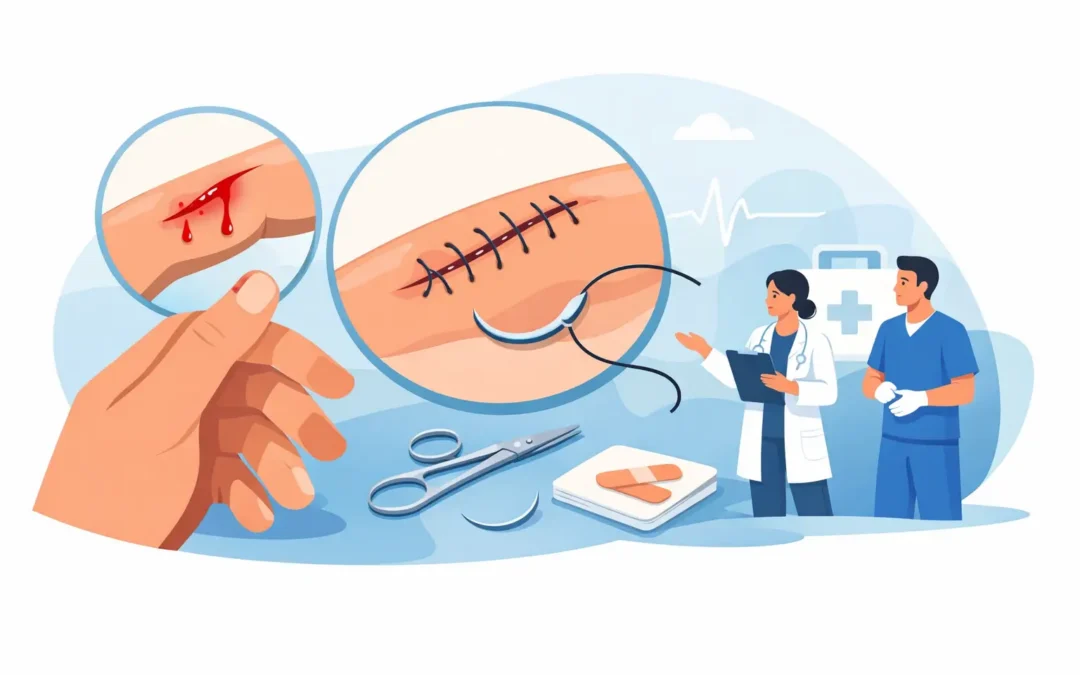
A kitchen knife slips. A child falls on the pool deck. A shaving cut will not stop bleeding before an important meeting. In those moments, one question matters fast: when do you need stitches?
The answer depends on more than how dramatic the cut looks. Some wounds appear small but are deep enough to separate the skin and need careful closure. Others look messy at first yet can heal well with proper cleaning and bandaging. Knowing the difference can help you avoid infection, reduce scarring, and get the right care without unnecessary delay.
When do you need stitches?
In general, stitches are considered when a cut is deep, wide, still bleeding after steady pressure, or located in an area where the skin pulls apart easily. A wound may also need stitches if the edges do not come together on their own, if you can see fat or deeper tissue, or if movement keeps reopening it.
Location matters just as much as size. A small cut on the face may need closure because precise healing can improve the cosmetic result. A cut over a knuckle, elbow, knee, or shin may also need stitches because those areas are under constant tension. Even a wound that seems manageable at first can worsen once the skin starts to swell or move.
A practical rule is this: if the skin edges are gaping rather than resting neatly together, it is worth having the wound evaluated promptly by a physician.
Signs a cut likely needs professional closure
Some signs are strong indicators that a wound should be seen the same day. Persistent bleeding is one of the most important. If you have applied firm, direct pressure for 10 to 15 minutes and the bleeding continues, the cut needs medical attention.
Depth is another clue. If the wound is deeper than the top layer of skin, or you can see yellow fat, muscle, or other tissue, simple home care is usually not enough. The same is true if the cut is longer than about half an inch and the edges spread apart.
Pain or numbness can also tell an important story. If you cannot move the area normally, or if part of the skin beyond the cut feels numb, there may be injury to a nerve or tendon. That moves the issue beyond basic wound care.
Cuts that should not wait
Some wounds need evaluation right away, whether or not stitches are ultimately used. Bites from people or animals carry a higher infection risk. Dirty wounds caused by glass, metal, gravel, or a fall outdoors may need more than simple closure. Cuts with debris embedded in them are especially important to assess carefully.
Wounds on the face, lips, eyelids, hands, fingers, genitals, or over joints deserve a lower threshold for urgent evaluation. These areas are functionally and cosmetically sensitive. Precision matters.
If the cut came from a high-force injury, if there is heavy bleeding, or if the wound is associated with dizziness, weakness, or severe pain, urgent medical care is the right next step. If bleeding is severe and will not slow, emergency care is more appropriate than routine urgent care.
When timing changes the answer
People often ask whether they can wait and see. Sometimes they can, but not for long. Stitches usually work best when placed within a fairly short window after the injury, often within 6 to 12 hours depending on the wound and the body area. Facial wounds may sometimes be closed later because the blood supply is better, but that decision should be made by a clinician.
Once too much time has passed, closing a wound may raise the risk of trapping bacteria inside. At that point, the safest plan may shift toward careful cleaning, dressings, or delayed closure instead of immediate stitches.
That is one reason it helps not to guess for too long. A prompt evaluation keeps more treatment options available.
When you may not need stitches
Not every cut needs sutures. A small, shallow cut that stops bleeding with pressure, has edges that stay together, and is not on a high-tension area can often heal well with good wound care at home.
In some cases, clinicians may use alternatives such as skin glue, adhesive strips, or steri-strips instead of stitches. These can be excellent for straight, clean cuts with minimal tension. They are often more comfortable and may leave a very good cosmetic result when used in the right setting.
This is where nuance matters. The best closure is not always stitches. The best closure is the one that matches the wound.
What to do before you’re seen
If you think a cut may need stitches, start with calm, basic first aid. Apply direct pressure using a clean cloth or gauze. Elevate the injured area if possible. Once bleeding slows, rinse the wound gently with clean water. Avoid pouring hydrogen peroxide or alcohol directly into the cut, as these can irritate healthy tissue.
If there is visible dirt near the wound, clean around it gently, but do not dig inside the cut with tweezers or cotton swabs. Cover it with a clean bandage and seek care.
If the injury was caused by glass and you suspect pieces may remain inside, or if the wound is puncture-like rather than open, do not try to manage it aggressively at home. Those injuries can be deceptively complex.
What about scarring?
Many patients are just as concerned about the final appearance as the immediate injury, and that is reasonable. Timely closure, precise alignment of the skin edges, and proper aftercare can all improve cosmetic healing.
That said, stitches do not erase the chance of a scar. They help by bringing the skin together in a controlled way. The wound still needs to heal, and factors such as depth, location, skin tension, genetics, and sun exposure all affect the final result.
Facial cuts are a good example. A relatively small laceration may still deserve prompt repair because a careful closure can make a noticeable difference later.
When do you need stitches versus glue or strips?
This is a common point of confusion. Stitches are usually better for deeper wounds, jagged cuts, wounds under tension, and areas that move a lot. Glue or adhesive strips can work well for short, clean, shallow cuts where the edges come together easily.
The trade-off is durability. Glue is quick and elegant for the right injury, but it is not strong enough for every location. A cut across a finger joint may look minor and still fail with glue alone because normal movement keeps stressing the skin.
A physician-led exam helps determine not only whether the wound should be closed, but how it should be closed for the best functional and cosmetic result.
Do you need a tetanus shot too?
A cut is not just about stitches. Tetanus protection matters, especially with dirty wounds, puncture injuries, outdoor injuries, or rust-contaminated objects. If you are not sure when your last tetanus shot was, bring that up during your evaluation.
This is one of the reasons professional wound care can be valuable even when the cut itself seems straightforward. The visible injury is only part of the picture.
Aftercare matters as much as the repair
Once a wound is closed, healing depends on what happens next. Keep the area clean and protected. Follow the instructions you were given about washing, ointment, and dressing changes. Watch for increasing redness, warmth, swelling, pus, fever, or worsening pain, as these can suggest infection.
Stitches also need follow-up removal at the right time. Remove them too soon and the wound may reopen. Leave them in too long and you may get more skin marking. Timing varies by location, which is another reason not to treat all cuts the same.
At Dr. Farah VIP Urgent Care, wound repair is approached with that level of precision – not just closing a cut, but protecting healing, comfort, and the best possible outcome.
A cut does not have to look dramatic to deserve attention. If the wound is deep, gaping, still bleeding, or in a sensitive area, it is worth getting it assessed early. A few careful minutes of expert treatment can make a meaningful difference in how well you heal and how confidently you move forward.