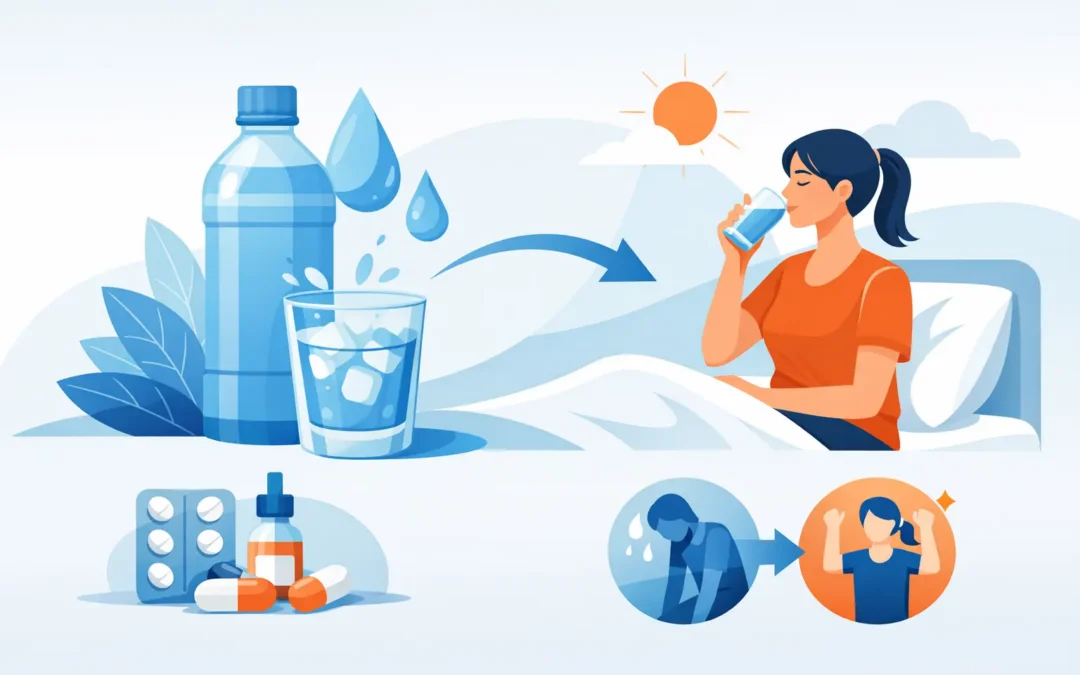
A pounding headache after a long day in the heat is easy to dismiss. So is fatigue after travel, dry mouth after a workout, or dizziness during a busy week when meals and fluids have been inconsistent. But when your body is running low on fluids, knowing how to treat dehydration early can make the difference between a quick recovery and a problem that escalates fast.
Dehydration happens when you lose more fluid than you take in. That can happen from heat exposure, exercise, vomiting, diarrhea, fever, alcohol use, certain medications, or simply not drinking enough water. In adults, the signs are not always dramatic at first. Many people just feel “off” – low energy, mentally foggy, lightheaded, or unusually irritable. Those subtle changes matter.
How to treat dehydration at home
For mild dehydration, treatment starts with replacing both fluids and electrolytes. Plain water helps, but it is not always enough on its own, especially if you have been sweating heavily or losing fluids through vomiting or diarrhea. In those cases, an oral rehydration solution or an electrolyte drink is often a better choice because it helps your body absorb fluid more efficiently.
The key is to sip steadily rather than chug large amounts all at once. If your stomach is sensitive, too much fluid too quickly can make nausea worse. Small, frequent sips every few minutes are usually better tolerated. Cool liquids may feel more comfortable, but the temperature matters less than consistency.
If you are able to eat, simple foods with some sodium and potassium can support recovery. Broth, soup, crackers, bananas, rice, toast, and applesauce are common options because they tend to be gentle on the stomach. If dehydration followed intense exercise or a day in the sun, resting in a cool environment is part of treatment too. Rehydration works best when you are no longer actively losing fluid through sweating or overheating.
Alcohol should be avoided until you are fully recovered. The same goes for excessive caffeine if it worsens stomach upset or contributes to fluid loss for you. A cup of coffee is not automatically harmful in every case, but when you already feel depleted, hydration should be the priority.
Signs you may be more dehydrated than you think
Mild dehydration can often be managed at home, but moderate to severe dehydration needs closer attention. One practical clue is urine output. If you are urinating very little, or your urine is dark amber rather than pale yellow, your body may be significantly behind on fluids.
Other concerning symptoms include a rapid heartbeat, marked weakness, dizziness when standing, dry skin and mouth, sunken eyes, confusion, or an inability to keep fluids down. In older adults, dehydration can present as unusual sleepiness, confusion, or a sudden drop in energy. In busy professionals and active adults, it is often mistaken for burnout, jet lag, or just a rough day.
Vomiting and diarrhea deserve extra respect here. You can lose fluid and electrolytes much faster than most people realize, and once nausea prevents you from drinking enough, home treatment becomes harder. The same is true after prolonged heat exposure. If your body temperature rises and hydration continues to fall, this can become a more urgent medical issue.
When dehydration needs urgent medical care
There is a point where the question is no longer just how to treat dehydration at home, but whether you need medical support. If you cannot keep fluids down, feel faint, have chest pain, severe weakness, confusion, shortness of breath, or signs of heat illness, you should seek prompt medical evaluation.
Medical care is also wise for dehydration in people with kidney disease, diabetes, heart conditions, or in anyone taking medications that affect fluid balance. Pregnant patients and older adults may need earlier evaluation as well because they can become medically unstable more quickly.
Blood in vomit or stool, severe abdominal pain, high fever, or symptoms that continue despite oral hydration are also signs to stop waiting. Dehydration is often a symptom of something else – a gastrointestinal infection, a urinary issue, uncontrolled blood sugar, heat exhaustion, or another acute illness. Treating the fluid loss matters, but identifying the cause matters just as much.
Oral hydration versus IV hydration
A common question is whether IV fluids are better than drinking fluids. The answer depends on the situation. If you have mild dehydration and can drink comfortably, oral hydration is usually appropriate and effective. It is less invasive and often all that is needed.
IV hydration becomes more useful when symptoms are more intense, absorption is limited, or time matters. If you are actively vomiting, too nauseated to drink, severely depleted after heat exposure, or feeling significantly weak and lightheaded, IV fluids can restore volume faster and more predictably. In a physician-supervised setting, treatment can also be tailored to your symptoms and the likely cause of dehydration.
That nuance matters. Not every tired person needs an IV, and not every case of dehydration should be brushed off with “just drink more water.” Good medical care looks at the whole clinical picture – vitals, symptoms, recent illness, medications, and whether there may be an underlying problem driving the fluid loss.
The most common mistakes people make
One of the biggest mistakes is waiting too long. Many adults push through early symptoms because they are busy, traveling, working out, or trying to finish the day. By the time dizziness, muscle cramps, or a pounding headache appear, the fluid deficit may already be significant.
Another mistake is relying only on plain water after major fluid loss. Water is helpful, but if you have lost sodium and other electrolytes through sweat, diarrhea, or vomiting, replacing fluid without electrolytes may leave you feeling poorly longer. This is one reason some people keep drinking and still feel weak.
People also underestimate how dehydration can overlap with other problems. Heat exhaustion, viral illness, stomach infections, urinary infections, high blood sugar, and medication side effects can all present with dehydration. Treating fluids alone may not fully solve the issue.
How to prevent dehydration before it starts
Prevention is usually less complicated than treatment, but it does require intention. Start hydrating before long workouts, outdoor events, flights, and busy days when you know you may forget to drink. If you exercise heavily or spend time in high heat, add electrolytes rather than relying on water alone.
Pay attention to your routine if you are using medications that can reduce appetite, increase fluid loss, or change your GI tolerance. This can include certain weight loss medications, diuretics, and some treatments that affect digestion. If eating and drinking less has become part of your pattern, hydration needs more attention, not less.
Older adults often benefit from a schedule rather than waiting for thirst. Thirst can become less reliable with age. The same is true during illness. If you have a fever, diarrhea, or vomiting, start replenishing early. It is easier to stay ahead of dehydration than to reverse it once symptoms intensify.
A more personalized approach to dehydration care
For some patients, dehydration is not a one-time event. It may happen repeatedly with strenuous training, frequent travel, GI sensitivity, heat exposure, recovery from illness, or medically supervised weight loss. In those cases, individualized guidance can be helpful. A physician can look at patterns, medications, diet, and underlying conditions to help reduce repeat episodes.
At a premium urgent care setting such as Dr. Farah VIP Urgent Care, hydration support can be evaluated in context rather than treated as a one-size-fits-all service. That means understanding whether you simply need fluid replacement, or whether symptoms point to something that deserves a fuller medical workup. That level of attention is especially valuable when you want prompt care without the impersonal feel of a crowded ER or standard walk-in clinic.
The right response to dehydration is usually simple when caught early: rest, fluids, electrolytes, and a little clinical judgment. When symptoms are more severe, fast physician-directed care can help you recover more comfortably and with greater confidence. If your body is sending warning signs, listen early – hydration is basic, but the consequences of ignoring it are not.